
Close the FLAG gap – and make your climate accounting SBTi-ready.
-
Ready-to-use FLAG emission factors — no time lost on research
-
Synchronized with your carbon accounting, with no additional effort
-
SBTi-aligned from day one, with comprehensive FLAG emissions coverage
leadity. lead with clarity.
The most common FLAG pitfalls for mid-sized businesses
Missing FLAG data can lead to SBTi rejection. Facing weeks of rework? There is a faster way.
Since April 2023, accounting for Forests, Land and Agriculture (FLAG) emissions has been mandatory for all SBTi commitments from companies where at least 20% of revenue, production volume, or raw material costs derive from land- and forestry-related activities. Major customers require suppliers to be SBTi-FLAG-compliant. Investors factor complete climate accounts — including land-based emissions — into their assessments.
The 20% threshold sounds logical — but which activities actually count? FLAG emissions complement the classic Scope 1–3 logic. What matters is not where they occur in the value chain, but how — through deforestation, methane from livestock, or fertiliser use. This is what makes them complex and difficult to pin down.
Companies start their accounting, run into data gaps, and get bogged down in research. The key questions are: which emission factors are standard-compliant — and where can they be found? How can primary data be collected from farmers without getting stuck in endless email threads? And how can audit-readiness be ensured?
Without clear answers, the risks are real: rejected SBTi commitments, a lack of audit-readiness, and lost contracts.
Why FLAG is not a “nice-to-have”
Make FLAG a competitive advantage, not a headache
What changes once your FLAG accounting is set up in leadity:
-
Your SBTi commitment gets validated — no revisions, no rejection.
Full emissions coverage, without material gaps. Your climate targets are approved on the first submission.
-
Your most important customers renew their contracts because you are a demonstrably SBTi FLAG-compliant supplier.
Food and agricultural buyers are increasingly demanding FLAG transparency. Without FLAG accounting, strategic partnerships are often out of reach.
-
New business opportunities open up.
Large buyers in the food and agricultural sector are demanding FLAG-compliant suppliers. Companies that disclose FLAG emissions transparently stand out from the competition.
-
Your sustainability reporting is complete — with no gaps.
CSRD, SBTi, supplier questionnaires: FLAG data from leadity is fully documented and audit-ready.
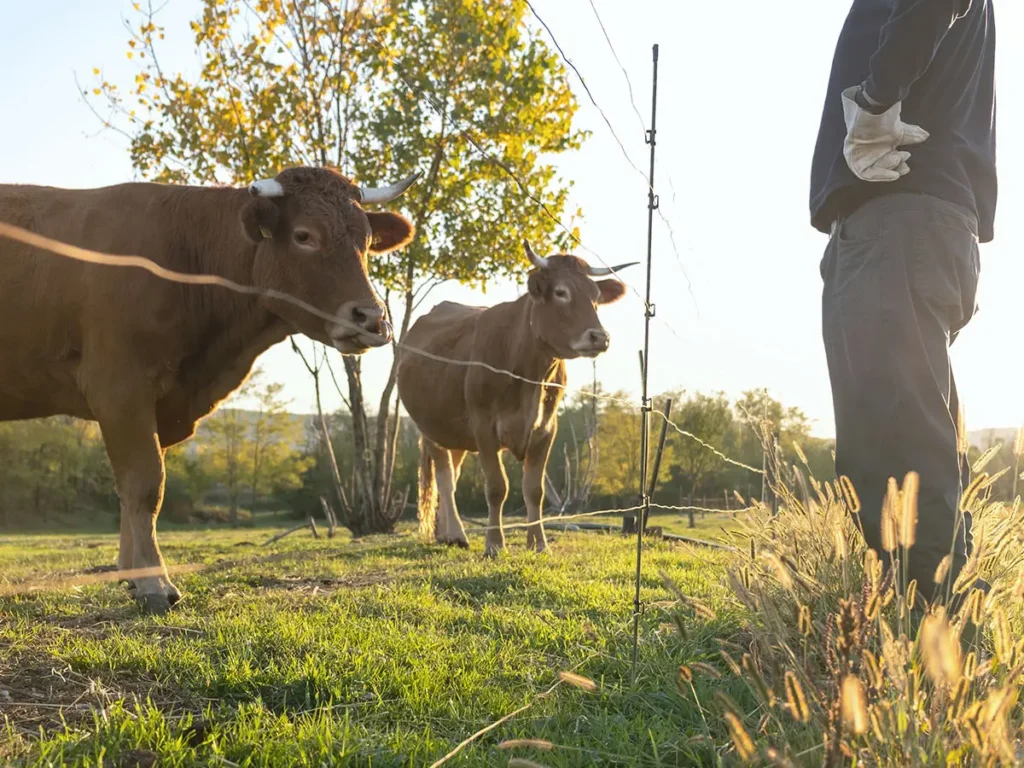
Full FLAG compliance is within reach
How to account for FLAG emissions without endless research
Your path to comprehensive FLAG emissions accounting starts here:
1. No more manual searches for emission factors
Land use change, methane emissions from livestock, fertiliser use — through an exclusive partnership with CarbonCloud, you gain access to 50,000 FLAG-specific emission factors. There is no need to research or maintain factors manually. leadity supports implementation with AI-assisted emission factor selection.
2. Clear distinction — no double counting
FLAG emissions are not a Scope 3 category; they follow their own accounting methodology. leadity accounts for FLAG emissions separately from classic Scope 1 and Scope 3 emissions and ensures your reporting is standard-compliant and audit-ready.
3. Automated accounting — synchronized to your CO2 balance
FLAG emissions are recorded automatically and synchronized with your standard CO2 accounting, as an integrated part of your leadity account. No additional effort for your team — if you already use leadity for your climate accounting, the process runs seamlessly. The software handles the data foundation, our team handles the advisory — personal, hands-on, and industry-specific.
4. From accounting to strategy: SBTi-aligned decarbonisation leadity links FLAG emissions directly to concrete decarbonisation measures — enabling you to implement Science Based Targets (SBTi) reliably, with clear reduction pathways, measurable levers, and transparent progress tracking.
5. More time for strategic tasks
Thanks to centralised data management, FLAG emissions are generated from data you have already collected. Your data works for you — and for all standards — not the other way around. You focus on reduction targets, not data maintenance.
Exclusive partnership with CarbonCloud:
The CarbonCloud database is integrated directly into the leadity software — a leading provider of FLAG emission factors with more than 50,000 specific data points for the food and agricultural sector. Would you like to see the benefit for yourself? We will review your top 10 FLAG emission factors free of charge.
Sustainability management with leadity — from mid-sized businesses to global players
lead with clarity — with more than 600 companies across 20+ industries in 50+ countries
















From “Am I affected?” to “FLAG is done!”
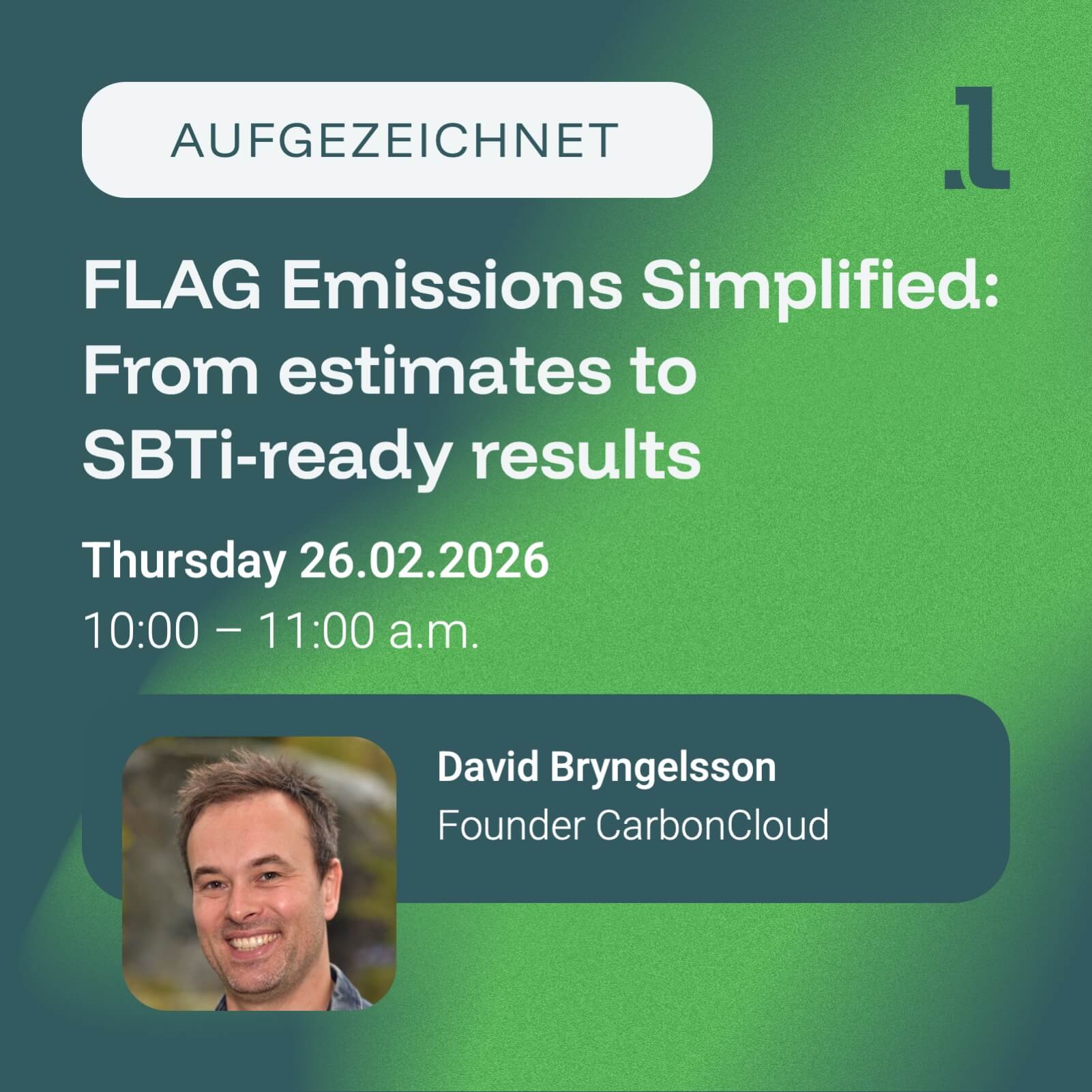
FLAG emissions become a competitive advantage instead of a headache.
Meet your stakeholders expectations by confidently fulfilling the requirements for science-based climate targets.
In this recording you’ll learn:
-
How to turn estimates into SBTi-ready data
-
How to put an end to supplier data chaos
-
How to meet SBTi requirements efficiently
Your free entry point into FLAG and SBTi compliance
Are you SBTi-ready? Get your free readiness check now.
In a personalised consultation, leadity experts review your carbon accounting for SBTi compliance — including FLAG emissions. You will receive a clear assessment of any gaps and the next steps required.
FAQs on FLAG emissions
Questions and answers about FLAG emissions with leadity
If you have any further questions, please feel free to email us at kontakt@leadity.de
FLAG stands for “Forests, Land and Agriculture“. FLAG emissions encompass all greenhouse gas emissions arising from land-based activities. These include, for example, emissions from deforestation and land use change, methane from livestock, and emissions from fertiliser use.
Particularly relevant: FLAG emissions can affect both Scope 1 and Scope 3. What matters is not the location, but the nature of the activity.
Primarily affected are companies in the forestry, land and agriculture sectors, as well as all companies whose value chain significantly relies on land-based activities. These include, for example, food manufacturers, the paper and timber industry, and agricultural businesses. As a rule of thumb: Any company committed to Science Based Targets (SBTi) whose emissions are 20% or more from land-based sources must account for FLAG emissions separately. What was once mainly relevant for large corporations is increasingly affecting mid-sized businesses as well.
FLAG emissions cannot be calculated using a one-size-fits-all approach. They vary significantly depending on geography, farming methods, and supply chain. Anyone working with generic average values for FLAG emissions risks inaccurate accounting. This is why leadity has partnered exclusively with CarbonCloud in the DACH region — giving you access to over 50,000 specific emission factors and results you can rely on.
Companies that fail to account for FLAG emissions despite an SBTi commitment face real consequences:
- Incomplete SBTi targets — FLAG emissions must be accounted for separately and be backed by dedicated reduction targets.
- Non-compliance — targets may be classified as incomplete.
- Loss of trust — among stakeholders, customers, and investors who expect a compliant climate strategy.
In short: Failing to account for FLAG emissions can undermine your entire SBTi communication.
Yes — and it can be well worth it. Even without an SBTi commitment, accounting for FLAG emissions provides valuable insights into your carbon footprint, particularly for companies with agricultural supply chains. Supply chain pressure is also growing: large buyers are increasingly requesting FLAG emission data directly from their suppliers.
FLAG emissions can fall under Scope 3, but follow their own methodology and accounting logic. While classic Scope 3 emissions are categorised according to the GHG Protocol, accounting for FLAG emissions requires specific emission factors and a separate target structure in line with SBTi. FLAG emissions also include carbon sinks — i.e. negative emissions — which are not part of the classic Scope 3 framework.
Anyone setting FLAG targets under SBTi simultaneously commits to a no-deforestation commitment. In practice, this means:
- Not causing or contributing to deforestation in your own supply chain.
- Keeping a close eye on commodities such as soy, palm oil, and beef.
- Adapting your procurement strategy — switching suppliers where necessary or prioritising certified alternatives.
Accounting for FLAG emissions is a paid add-on to your leadity account. Once FLAG emissions are activated for your company, there are no further costs or effort required on your end. For individual pricing details, we recommend a personal consultation — please feel free to contact us.
Currently there is no legal obligation to account for FLAG emissions, atleast not for all companies. However, the requirement arises in two cases:
- SBTi commitment: Companies setting science-based climate targets must account for FLAG emissions separately if they make up a significant share of their total footprint.
- Supply chain pressure: Large corporations are increasingly passing FLAG emission requirements down to their suppliers.
Our tip: Companies that start accounting early are better prepared — and can turn FLAG emissions into a competitive advantage.
Less than you might think. In most cases, no additional data is needed beyond your existing CO2 accounting. Here is how it works:
- You enter your data in your leadity account – as usual.
- leadity automatically adds the relevant FLAG emission factors from the CarbonCloud database.
- FLAG accounting runs additionally — no extra effort on your end.
The effort stays the same — the insight gained increases significantly.