XDC: The SBTi upgrade that finally gives you straight answers.
-
Your climate impact as a clear, traceable °C figure
-
Set meaningful targets, track them in real time, and achieve measurable results
-
CO2 footprint, XDC & SBTi for EmpCo-compliant climate communication
leadity. lead with clarity.

The most common SBTi concerns in mid-market businesses
Weeks of data collection — and still no clarity? There is a better way.
Carbon footprint calculated, climate targets defined — and still uncertain whether you are on track? Customers and investors expect measurable results, tenders require ambitious climate targets, and competitors are openly demonstrating their progress. Yet in day-to-day operations, there is simply not enough time to address this in a structured way.

The two biggest obstacles:
1. Absolute reduction targets don’t work when you’re growing. Standards such as SBTi or the GHG Protocol rely on absolute reductions. When revenue, production, or locations grow, rigid reduction pathways quickly become unrealistic — even effective climate measures may go unrecognised as a result.
2. SBTi is often oversized for mid-market businesses. Science Based Targets are considered the gold standard. However, the validation process is lengthy, complex, and resource-intensive — simply not feasible for many SMEs.
Without a structured approach, climate management becomes a maze of numbers — progress is difficult to measure, even though it should actually form the foundation for credible, robust and EmpCo-compliant climate communication.. This is precisely where leadity steps in with the X-Degree Compatibility (XDC) model.
What XDC stands for
XDC gets your climate impact to the point
The X-Degree Compatibility (XDC) model was developed by right. based on science to make climate impact tangible not just in tonnes of CO₂, but as an easy-to-understand temperature value in degrees Celsius.
XDC translates your carbon footprint into a single, straightforward degree Celsius figure: How much would the Earth warm if every company operated the way yours does? This science-based metric makes climate impact comparable — against the 1.5°C target of the Paris Agreement and against your competitors.
From raw CO₂ data to real climate management
Climate management that works. Communication that convinces.
With XDC in leadity, you make your climate strategy measurable, manageable and robustly communicable:
-
Transparency instead of guesswork: See in real time how far your company is from the 1.5°C target — expressed as a single, intuitive degree Celsius figure.
-
Scenario analyses for informed decisions: Simulate different reduction pathways and identify which measures deliver the greatest impact — based on data, not instinct.
-
XDC and SBTi strategically combined — in one software: SBTi validates your climate targets, XDC makes progress manageable. Use both together, or XDC as a flexible alternative for growing companies.
-
Know where you stand relative to your industry: Benchmark your climate performance and identify where you have a competitive edge — and where action is needed.
-
Stakeholder communication that convinces: Make your climate progress clear and easy to understand. “With our defined measures, we are on track for a 1.3°C scenario” says more than “We have saved 4,000 tonnes of CO₂.” Our EmpCo claims check shows you how to review your claims for EmpCo compliance.
-
Full visibility without additional effort: leadity seamlessly integrates XDC and SBTi for maximum flexibility. The XDC API delivers up-to-date results in real time — with no additional data collection required.
Step by step towards precise climate management
This is how XDC brings your climate impact into sharp focus.
Your path to controllable climate goals with leadity starts here:
1. Automated XDC calculation from your existing data Capture your emissions centrally in leadity. Enter them once — and use them across all standards. Already tracking your carbon footprint in leadity? Perfect. We automatically calculate your XDC value: The degree-Celsius figure that shows how far you are from the 1.5°C target and creates a robust foundation for management and communication.
2. Real-time tracking of your climate performance Stay on top of your progress at all times. leadity does not only visualise your progress at company level, but also makes the need for corrective action visible in individual areas such as energy, fleet, procurement or transport. This allows you to show customers in a robust way how your climate performance is developing — even if an SBTi process is not practical for your company.
3. Scenario analysis for strategic decisions What happens if you invest in renewable energy? leadity shows you the impact in degrees Celsius. Which measures deliver the greatest effect? leadity simulates different reduction pathways and shows you how investments move your degree-Celsius figure.
4. Stakeholder reports at the click of a button
Create clear and robust climate reports for investors and customers — built around meaningful degree-Celsius figures rather than abstract CO₂ tonnage.
How XDC improves climate management
In an expert interview, Hannah Helmke, founder of right°, explains:

“Companies fail when they set climate targets on principle alone — without thinking through what those targets actually mean. leadity now gives companies the tools to understand their own position through XDC: Where do I stand, and how far is the road to 1.5°C really? This enables realistic target-setting and practical progress tracking.”
Sustainability management with leadity — from mid-market businesses to global players
lead with clarity — with more than 600 companies from over 40 industries in over 50 countries


















EcmpCo compact: Your checklist for compliant climate claims
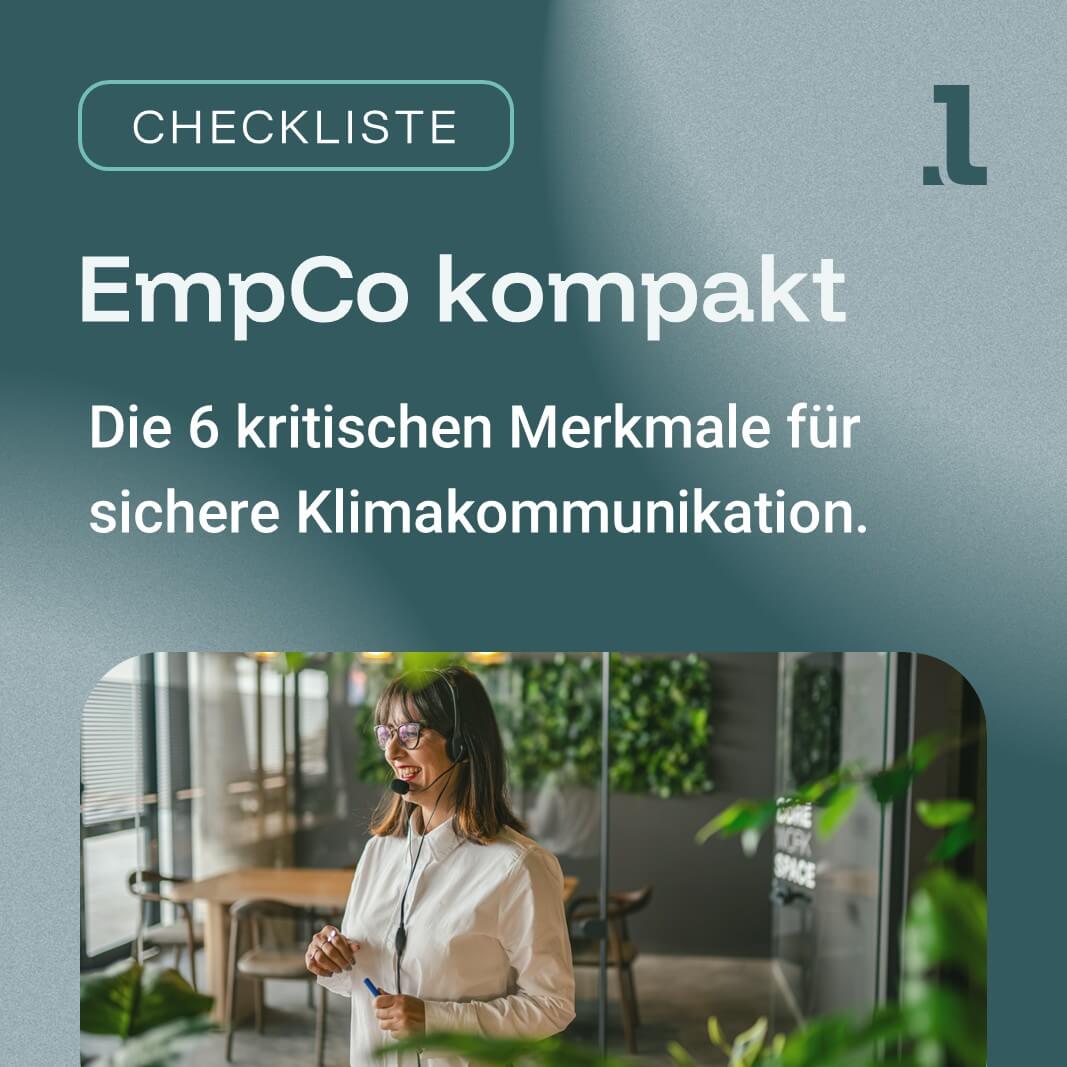
Communicate climate action — but with confidence!
Learn which 6 requirements your climate claims must meet for EmpCo compliance – and how leadity and the XDC model help you communicate clearly, credibly and with confidence.
In this checklist, you will learn:
-
The 6 requirements compliant climate claims must meet
-
How to substantiate climate action in a transparent and credible way
-
How leadity and the XDC model support EmpCo-compliant communication
Where does your company stand compared to your industry?
Free initial consultation: Your individual XDC benchmarking
Book a free consultation and receive your individual, industry-specific benchmarking based on the XDC model — developed in cooperation with right°.
leadity AI features at a glance
AI power exactly where ESG & ISO otherwise mean grinding manual work
Our clea AI handles the complexity. You stay in control. Your data stays in Germany. Encrypted, stateless, no third-party training. AI only where it truly makes a difference — we mean it


FAQs on the industry solutions
Questions and answers about XDC with leadity
If you have any further questions, feel free to send them to kontakt@leadity.de
XDC stands for “X-Degree Compatibility”. The model translates your CO₂ emissions into a single temperature figure in degrees Celsius, showing how far your company is from the 1.5-degree target of the Paris Agreement. In short: Instead of abstract tonnage figures, you get a metric that everyone understands.
SBTi validates your climate targets — XDC makes progress visible and manageable. While SBTi focuses primarily on target-setting, XDC delivers a clear metric for your current position and the path forward. Both approaches complement each other. Alternatively, XDC can be used as a flexible standalone option — particularly for growing companies.
Hannah Helmke, founder of right. based on science, puts it plainly: “I don’t know of a single company where XDC was not accepted.” XDC results are ESRS-ready and are already used in annual and sustainability reports.
In leadity, your corporate carbon footprint feeds directly into the XDC calculation — no duplicate data entry, no detours. Emission data captured once can be used simultaneously for XDC, SBTi, CSRD reporting, and stakeholder reports. Everything comes together in one central system.
Yes — and that is one of its biggest advantages over SBTi. Traditional absolute reduction targets often don’t reflect the reality of growing companies. XDC assesses the climate compatibility of your business activities and remains meaningful even as revenue grows or new locations are added.
For individual pricing information, we recommend a personal consultation. Book your free XDC benchmarking.