ISO 50001 software: Energy management that delivers in audits and day-to-day operations.
-
ISO 50001 requirements under control — not weighing you down
-
Manage internal audits and document control centrally
-
Turn energy targets into effective action
leadity. lead with clarity.
ISO 50001 software for measurable energy efficiency
Energy targets on paper alone do not save energy.
Your ISO documentation is scattered across different storage locations and tools. Your KPIs are listed in different files. Measures are in place, but their impact is missing. Above all, you lack a system that makes ISO 50001 manageable in everyday operations.
The result: Workflows remain unclear and processes are not managed consistently. Improvements are difficult to verify. And before every ISO 50001 audit, the search for evidence starts all over again.

Everyday reality shows: It is not ambition that is missing, but structure.
-
You are dealing with data chaos and duplicate work: ISO in Excel. ESG in the tool. Energy data in the EMS. The same figures — maintained three times, rarely consistent and out of sync.
-
ISO turns into a bureaucracy project: Little happens between audits. Measures lose momentum, and KPIs are not monitored. ISO should guide action and deliver results, not just document them.
Without central control, you are left with bureaucracy instead of impact. But with leadity, you turn energy management into a routine you can control.
Prepare efficiently for audits with leadity.
Do not just measure consumption. Manage impact.
With leadity, you bring ISO 50001 requirements, documents and evidence together in one structured system. You carry out gap analyses, make required action clear and prepare your ISO 50001 audits efficiently. A study by the BfEE shows that ISO 50001-certified companies achieve annual energy savings of between 3 and 4%.
What can leadity’s ISO 50001 software do?
-
Conduct a structured context analysis: Determine the external and internal issues that affect your energy management system. Build the foundation for all further ISO 50001 requirements.
-
Manage energy targets and measures:Set energy targets that align with your energy policy and SEUs. Assess the impact of your measures and track ROI and KPI progress instead of merely maintaining lists.
-
Documents under control, not scattered: Bring documents and evidence together centrally. Keep them available where needed and protected against loss or unauthorized access, with clear approval workflows and version control.
-
Structured guidance with clea AI:Guides, templates and our clea AI guide you through every topic and data entry step by step. This helps non-energy experts reach their goals with confidence.
-
Guided workflows for all ISO 50001 tasks: Tasks, deadlines, teamwork – one workflow for all your ISO 50001 processes. No more Excel lists or endless email chains. Finally, clear responsibilities instead of ad hoc coordination.
-
Master your internal audit: Audit questionnaires for each department, AI-supported audit reports and automatic evidence matching. Build a reliable, audit-ready foundation for internal and external audits.
Your path to clear energy management
You take the lead. We keep your energy data together.
Whether you are building your management system from scratch, digitising existing processes, or connecting ISO 50001 with other standards and ESG: leadity guides you through the process step by step. ISO 50001 requirements become clear structures. Scattered documents become central evidence. Open points become a predictable path to certification.




ISO & ESG management with leadity – from mid-market businesses to global players
lead with clarity – with more than 600 companies across more than 40 industries in over 50 countries


Report once, benefit twice
How much potential are you leaving on the table?
Find out now where you can eliminate duplicated effort — and how leadity helps you reclaim time for what truly matters, instead of constantly chasing data or spending more time reporting than actually making an impact.
leadity AI features at a glance
Use AI precisely where ESG & ISO would otherwise become busywork
Our clea AI handles the complexity. You stay in control. Your data remains GDPR-compliant in Germany.
Encrypted, stateless, with no training by third parties. AI only where it truly helps.


ISO clarity for mid-market businesses: From standard to advantage
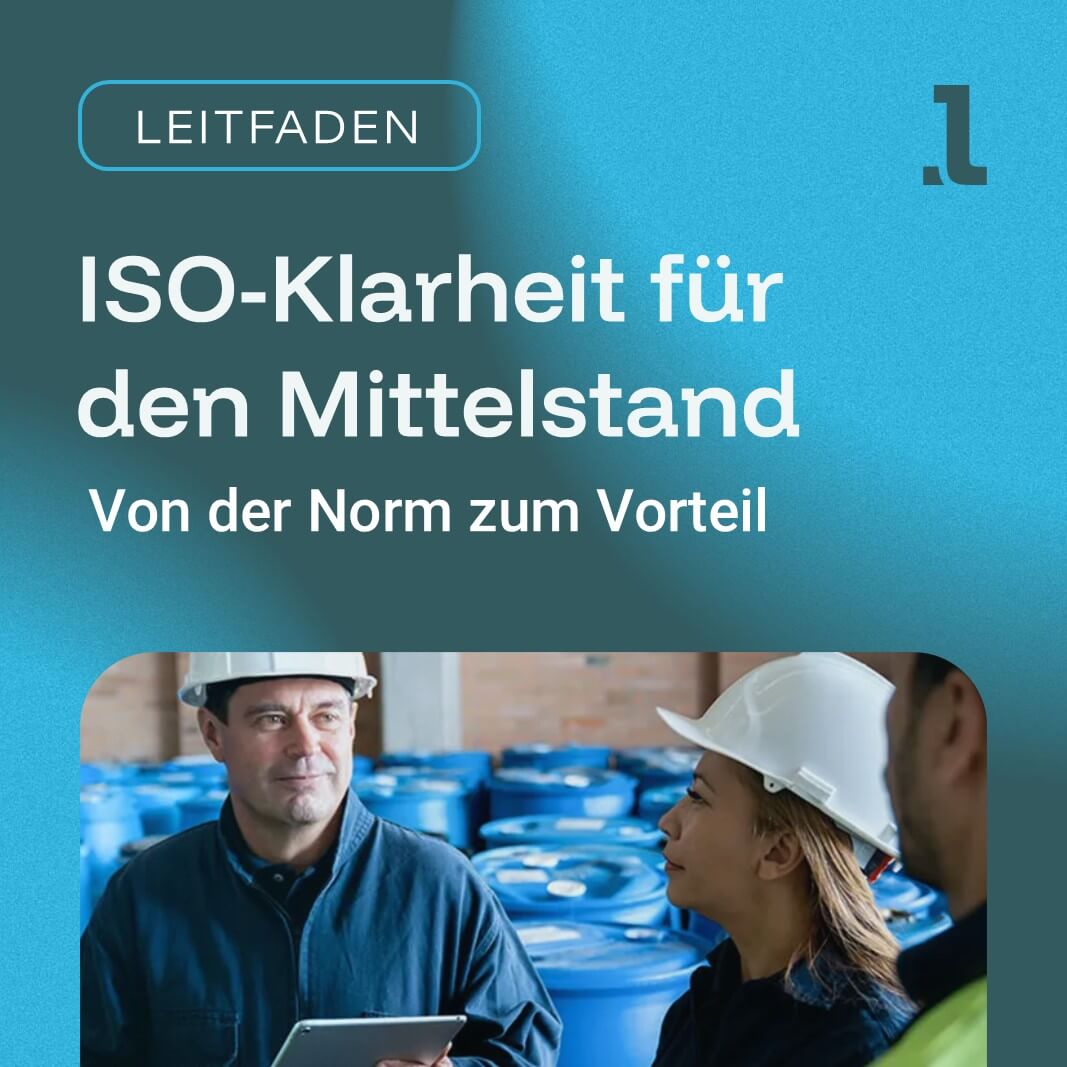
Clarity for your ISO management system
Learn how to effectively establish and manage ISO systems in mid-market businesses, discover the benefits of the PDCA cycle, and leverage the key synergies between ISO standards.
In this guide, you will learn:
-
How to turn ISO requirements into an effective management system
-
How to connect risks, actions and KPIs using the PDCA cycle
-
How to integrate multiple ISO standards and ESG while avoiding duplicate work
FAQs on the topic of ISO 50001
Questions and answers about ISO 50001 with leadity
If you have any questions, feel free to send them to kontakt@leadity.de
The ISO 50001 is the international standard for energy management systems. It supports organisations in systematically managing energy efficiency, energy use and energy consumption, and in continuously improving energy performance.
ISO 50001 requires organisations to implement a systematic energy management process: This includes conducting an energy review, identifying significant energy uses, defining energy performance indicators and energy targets, and planning and implementing suitable measures. Energy performance and the effectiveness of the energy management system are regularly monitored and evaluated.
The ISO 50001 standard itself is voluntary. It only becomes mandatory through the Energy Efficiency Act (EnEfG).
From an annual energy consumption of 7.5 gigawatt hours, companies must implement a certified system — ISO 50001 or EMAS. From 2.5 gigawatt hours, additional reporting obligations apply to efficiency measures.
If your consumption is below this threshold, you decide for yourself. Many companies still implement the standard voluntarily: They demonstrably reduce costs and create structure for future reporting obligations.
ISO 50001 can be applied by organisations of any size and industry – regardless of the types or amounts of energy they use. The standard is particularly relevant for organisations with energy-intensive facilities, production processes or multiple sites.
It is suitable both for organisations that want to build an energy management system from the ground up and for companies that want to digitise and connect their existing energy, environmental or ESG processes.
ISO 50001 requires systematic energy management based on the Plan-Do-Check-Act cycle. Key requirements include:
- You define an energy policy and clearly assign responsibilities for energy management.
- Your organisation assesses its energy uses and energy consumption and identifies significant energy uses, known as SEUs.
- You define energy performance indicators (EnPIs) and establish energy baselines (EnBs) for comparing energy performance.
- You plan the collection, monitoring and analysis of relevant energy data.
- You set energy targets and action plans and take energy efficiency into account in design and procurement.
- Your organisation reviews the effectiveness of its energy management system through measurements, internal audits and management reviews, and continuously improves it.
The key point is that the standard does not prescribe a uniform level of savings for all organisations. It requires the organisation to systematically improve its energy performance and demonstrate this improvement.
An energy audit typically examines energy use and identifies potential savings. ISO 50001 goes further: It establishes a long-term management system for continuously managing energy targets, responsibilities, measures, KPIs and improvements.
An internal ISO 50001 audit is also not the same as an energy audit. An internal ISO 50001 audit assesses whether your energy management system meets the requirements of the standard and is implemented effectively.
Yes. Under Module 3 of the Federal Funding Programme for Energy and Resource Efficiency (EEW), the BAFA (Federal Office for Economic Affairs and Export Control) subsidises the purchase of energy management software. Small businesses can receive up to 45% of the costs, medium-sized businesses up to 35% and large businesses up to 25%.
Prerequisite: The software must be included on the official BAFA funding list. leadity is currently not included on this list because it focuses on ISO 50001 software and is not energy management software.
leadity maps ISO 50001 requirements in a structured way and supports you from context analysis and energy targets through to document control. leadity brings together existing documents, evidence and relevant information, assesses the gap between target and actual status and prepares internal audits in a structured way.
In our free ISO check, we help you turn ISO from a headache into a competitive advantage. In our personal consultation, you will learn where you can save valuable time in your day-to-day work and audit preparation, and how to identify and close existing gaps in good time. Turn your ISO chaos into routine.
Yes. ISO 50001 can be implemented independently or integrated with other management systems. Like many other ISO standards, ISO 50001 is based on the High-Level Structure (HLS). This shared underlying structure ensures that key elements such as the organisation’s context, leadership, risks and opportunities, targets, measures, audits and management reviews follow a similar structure across many standards.
This makes integration easier: Shared processes and evidence can be used across multiple management systems. The specific requirements of each standard remain in place, such as the energy review, energy performance indicators and significant energy uses required by ISO 50001.
Connecting ISO 50001 with ESG management also offers significant potential. You can use KPIs and evidence across different management and reporting processes. This allows you to capture information once and use it multiple times, for example for ISO evidence, climate management and ESG management.
With leadity, you can map individual and integrated ISO audits. This reduces duplicated work and provides you with a shared, central information base.
Under Clause 4.1 of ISO 50001, your organisation must determine the external and internal issues that are relevant to its energy management system. These may include legal requirements, energy price developments, or internal resources and responsibilities. This context analysis provides the foundation for the energy policy, targets and measures.
With leadity, you capture your context factors in a structured way and link them to the relevant requirements, instead of managing them in a separate document that is never looked at again.